Design Insights August 6, 2026
By SandCup
Ask a designer to send you what colour they're using, and chances are they won't answer "blue."
They'll probably say #2563EB.
Somebody else might mention #FF6B6B or #111827. Developers understand it immediately, design systems recognize it, and every design tool knows exactly what to do with it.
It is such a normal part of digital design that we rarely wonder about the purpose behind it.
But think about it for a moment.
Different design disciplines have developed their own ways of communicating colour. Print relies on systems like Pantone and CMYK. Paint manufacturers have swatches and catalogues. Textile industries have their own colour standards.
Digital design, however, ended up speaking in six seemingly random characters.
Why?
Computers Don't See Colour. They Read Instructions.
Ask ten people to imagine the colour "blue," and you'll probably get ten different shades. Someone imagines the sky. Someone thinks of the ocean. Someone pictures navy. Another thinks of turquoise.
Human beings are comfortable with approximation because colour is an experience before it is a specification. Computers work the other way around.
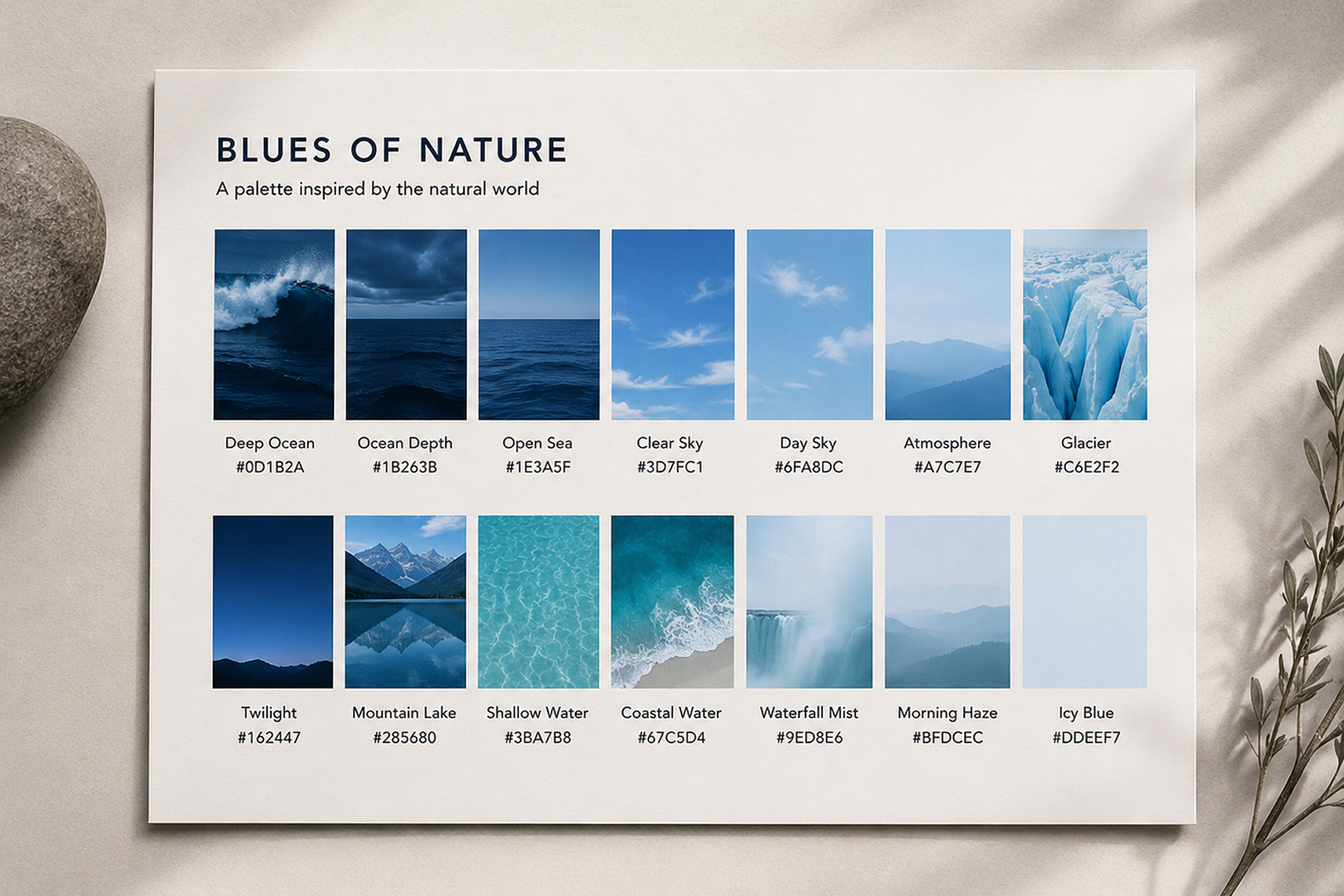
They cannot display "something close to blue." They need exact instructions. Every pixel on a screen has to be told precisely what colour it should become. As computers became capable of displaying millions of colours, engineers needed a way to describe every possible colour without leaving room for interpretation.
That was the real problem. Designers simply inherited the solution.
The Language Was Never Meant for Designers
When engineers looked for a way to represent colours digitally, they already knew that screens produced colours by combining red, green, and blue light.
Changing the intensity of these three colours could create millions of others.
Now they needed a language that computers could process efficiently while remaining manageable for humans.
Binary was too long to read. Decimal worked, but it wasn't particularly elegant when every colour channel needed values between 0 and 255.
Hexadecimal turned out to be the sweet spot!

It compressed binary into something much shorter without losing precision. Two hexadecimal characters could represent every possible value for red, another two for green, and another two for blue.
Without trying to, engineers had created one of the most recognizable standards in digital design.
The Web Made It Universal
The rise of the web gave hexadecimals another purpose.
A website designed on one computer needed to look the same on another. Browsers had to agree on what every colour meant, regardless of who built the page or where it was being viewed.
Hex codes became that common language. Designers and developers could now communicate colour with complete certainty, even if they had never met or worked in different parts of the world.
Long before collaborative design tools existed, hex codes were already making collaboration possible.
Somewhere Along the Way, They Became Design Culture
Interestingly, most designers never learn hexadecimal. They simply grow into it.
The first few times, a hex code feels like a technical value copied from a colour picker. After enough projects, it becomes part of everyday vocabulary. You might go from saying, "Make the button a little darker." to "Let's try #2563EB."

Brand guidelines include them. UI kits organize them. Developers expect them. Design critiques reference them without explanation.
But Notice What's Changing
Open a modern design system today, and you'll notice that designers don't interact with hex codes as often as they once did.
Instead, they work with names like Primary, Surface, Accent, Success, Warning, or Error. The colour still has a hexadecimal value underneath, but that value is no longer the thing designers think about first.
The emphasis has shifted from what the colour is to what the colour does. A primary colour can change during a rebrand. A success colour may evolve for accessibility. A surface colour might adapt automatically between light and dark themes.
The hex code still exists. It has simply moved into the background while the system takes center stage.
The Best Design Languages Are the Ones We Stop Noticing
Hex codes were never invented to become part of design culture. They were created because computers needed an efficient way to describe colour.
Yet decades later, they continue to connect designers, developers, browsers, operating systems, and design tools through one shared language.
Today, variables, semantic tokens, and AI-assisted workflows are changing how we design interfaces. The tools will continue to evolve, and the way we manage colour will evolve with them.
But beneath every interface, every design system, and every product we build, those six characters are still quietly doing the same job they were created for.
Perhaps that is the real story behind hex codes. They outlived the problem they were created to solve, yet continue to shape everything we design today!
Be a part of our world and gain more insights on design and innovation!